MPMT2002ATS Performance Data: 5 Key Metrics Defining Precision Stability
In high-precision analog signal chains, a single resistor network can determine system accuracy. The MPMT2002ATS thin-film divider achieves ±25 ppm/°C tracking and <10 ppm long-term drift—metrics that define true precision stability in today’s demanding industrial applications. But how do you validate these claims? This guide breaks down the five critical performance data points engineers must analyze to ensure circuit reliability.
Understanding the MPMT2002ATS Architecture

To interpret the performance data correctly, one must first grasp the underlying construction of the component. The architecture dictates thermal behavior and electrical consistency, forming the foundation for all subsequent metrics.
Thin-Film Technology vs. Thick-Film Alternatives
The MPMT2002ATS utilizes advanced thin-film deposition techniques rather than traditional thick-film printing. Thin-film resistors offer superior homogeneity and tighter tolerances because the resistive material is deposited at the atomic level. In contrast, thick-film components often suffer from grain boundary inconsistencies, leading to higher noise and poorer matching. For your design, this distinction means thinner films provide better predictability in ratio-matching applications, crucial for maintaining signal integrity over time.
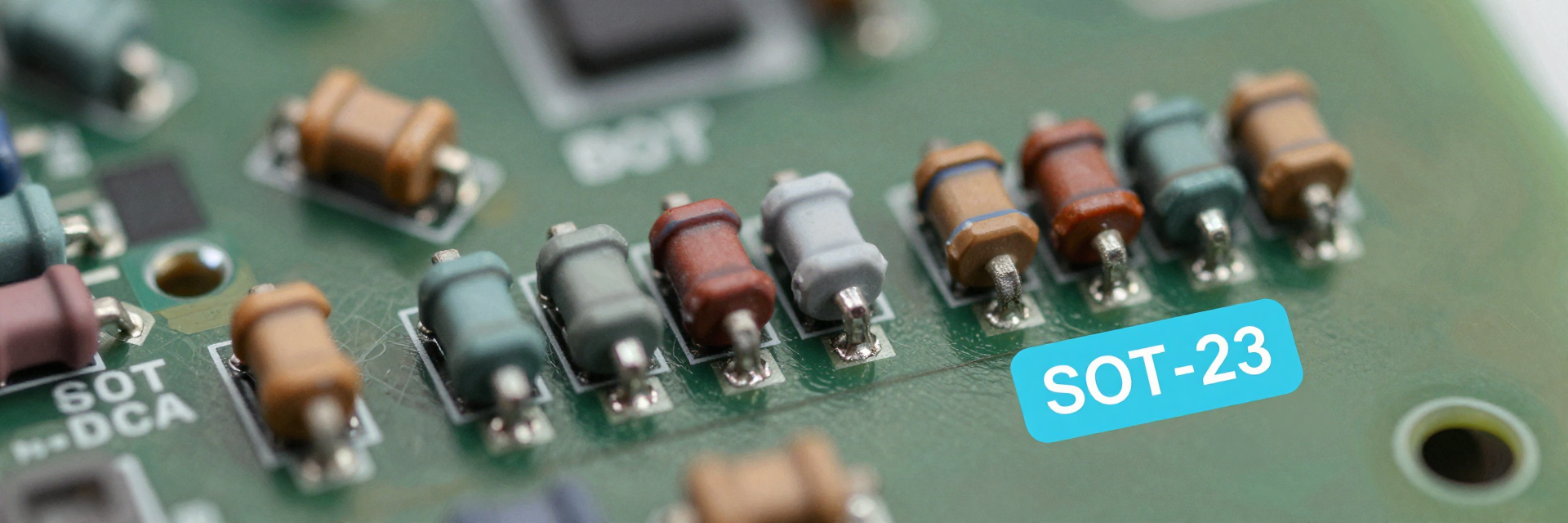
SOT-23 Package Impact on Thermal Management
Housed in a compact SOT-23 package, the device balances space efficiency with thermal dissipation capabilities. While small packages generally pose thermal challenges, the specific layout of the MPMT2002ATS minimizes internal temperature gradients between resistive elements. You should consider this packaging when designing dense PCB layouts; ensuring adequate copper area beneath the pads helps mitigate self-heating effects, preserving the stated performance data under load.
Metric 1: Temperature Coefficient of Resistance (TCR) Analysis
Temperature variations are the primary enemy of precision circuits. Analyzing TCR involves looking beyond individual element specs to understand how ratios behave across thermal cycles.
| Parameter | Specification | Impact on Design |
|---|---|---|
| Absolute TCR | ±25 ppm/°C | Minimizes offset errors in wide temp ranges (-40°C to +85°C) |
| Tracking Error | Tight Matching | Maintains stable CMRR for differential signals |
| Long-term Drift | <10 ppm | Ensures multi-year reliability without recalibration |
Individual Resistor TCR: ±25 ppm/°C Specification
Each resistor within the network maintains an absolute TCR of ±25 ppm/°C. This low coefficient ensures that resistance changes minimally as ambient temperatures fluctuate. If you are operating in environments ranging from -40°C to +85°C, this specification guarantees that individual value shifts remain within predictable bounds, preventing significant offset errors in measurement systems.
Tracking Error: How Ratio Drift Affects Differential Signals
More important than absolute TCR is the tracking error—the difference in TCR between paired resistors. The MPMT2002ATS excels here, with tight tracking specifications ensuring that both elements change resistance proportionally. For differential signals, this means the common-mode rejection ratio remains stable despite thermal stress. You can rely on this consistent ratio drift to maintain calibration accuracy without frequent recalibration.
Metric 2: Initial Ratio Tolerance & Matching
Precision begins at manufacturing. Initial tolerance determines the starting point of your accuracy budget, directly impacting ADC front-end performance.
Tight Ratio Tolerance: Single-Digit ppm Matching
Out of the box, the device offers single-digit ppm ratio tolerance. This exceptional matching reduces initial gain error significantly. When designing instrumentation amplifiers or voltage dividers, this tight tolerance allows you to allocate more of your error budget to other sources, such as amplifier input bias current or reference voltage instability.
Calibration Requirements for High-Accuracy ADC Front-Ends
With such precise factory matching, many high-accuracy ADC front-end designs may require minimal or no post-production calibration. This simplifies manufacturing processes and lowers total cost of ownership. However, always verify against your specific application’s resolution requirements; for 24-bit systems, even single-digit ppm errors might necessitate fine-tuning, but the baseline provided by this component is exceptionally strong.
Key Summary
- The MPMT2002ATS uses thin-film technology for superior homogeneity compared to thick-film alternatives.
- A ±25 ppm/°C TCR with excellent tracking ensures stable differential signal performance across temperature ranges.
- Single-digit ppm initial ratio tolerance minimizes the need for extensive post-manufacturing calibration.
- Long-term drift below 10 ppm guarantees reliability for years, not just hours, in industrial settings.